Lucky by Design: How America Fell Head Over Heels for Certain Numbers
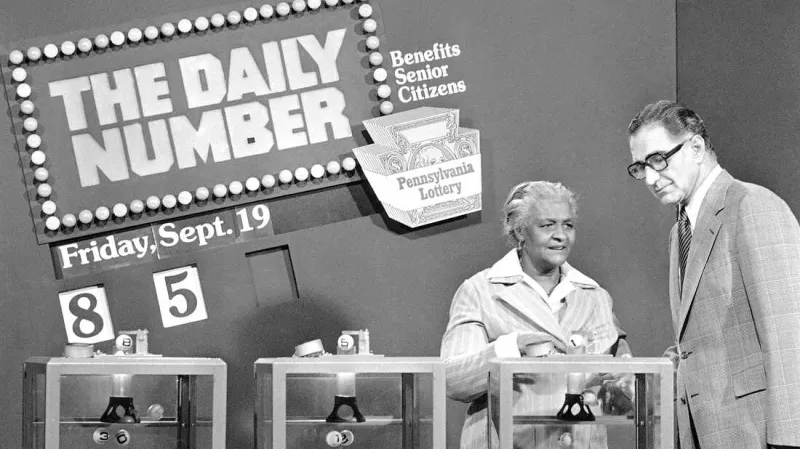
Photo: lucky numbers symbols American cultural history vintage lottery, via media.npr.org
Ask any regular player which number they'd pick if they had to choose just one, and chances are they won't hesitate. They'll tell you seven. Or maybe three. Or perhaps a date so personal it practically has its own heartbeat. The answer comes fast — almost instinctively — and that's exactly the point. Lucky numbers don't feel like a choice. They feel like something you know.
But where does that knowing come from? The answer stretches back centuries and winds through some of the most fascinating corners of American cultural history.
Before the Lottery: Indigenous Roots of Sacred Numbers
Long before European settlers arrived with their own numerological traditions, Indigenous peoples across North America held certain numbers in deep spiritual regard. The number four, for instance, carried enormous significance among many Plains nations — representing the four cardinal directions, the four seasons, and the cyclical nature of life itself. Ceremonies were often structured around groups of four, and this reverence for the number wasn't arbitrary. It was a map of the world.
Similarly, many Southwestern tribes treated the number six as sacred, adding the concepts of above and below to the four directions to complete a spiritual compass. These weren't superstitions in the dismissive sense of the word — they were sophisticated frameworks for understanding existence.
While these traditions didn't feed directly into modern American gaming culture, they laid an early foundation for something important: the idea that numbers carry meaning beyond their mathematical value. That idea never really left.
The Great Immigration Wave and the Numbers That Crossed the Ocean
Between the 1880s and the 1920s, millions of immigrants poured into American cities, and they brought their number beliefs with them like heirlooms tucked inside luggage.
Italian immigrants introduced a rich tradition tied to the Smorfia — a Neapolitan system that assigned symbolic meaning to numbers based on dreams, events, and everyday life. If you dreamed of your grandmother, there was a number for that. A fire? A number for that too. Italian communities in cities like New York and Chicago kept these systems alive for generations, and some historians argue this culture directly influenced the informal "numbers game" that became a fixture of urban life in the early 20th century.
Chinese immigrants brought with them a deep-rooted belief in the power of eight — a number that sounds like the word for prosperity in Cantonese. Eight was (and still is) considered extraordinarily auspicious, so much so that in modern times, people have paid enormous sums for phone numbers, license plates, and addresses containing multiple eights. Meanwhile, four is widely avoided because it sounds like the word for death. These associations didn't stay confined to immigrant neighborhoods — they seeped into the broader cultural conversation about luck and numbers.
Jewish communities contributed gematria, an ancient practice of assigning numerical values to Hebrew letters and finding meaning in the resulting sums. The number 18 — spelling chai, meaning "life" — became one of the most beloved in American Jewish culture, showing up in charitable donations, birthday gifts, and yes, gambling bets.
Seven: America's Undisputed Champion
Among all the numbers that have competed for the title of America's luckiest, seven has dominated for as long as anyone can remember. And the reasons are almost comically layered.
Christian tradition gives us seven days of creation, seven deadly sins, and seven sacraments. Ancient cultures identified seven visible celestial bodies. Shakespeare wrote of the seven ages of man. Psychologists have noted that seven sits comfortably at the edge of short-term memory capacity — it's the number of digits in a local phone number, not by accident.
For American players, seven took on extra weight when it became the jackpot symbol on early slot machines. That association reinforced itself across decades of pop culture, advertising, and gaming iconography. Today, when someone picks their lottery numbers and includes a seven "just because," they're participating in a tradition with roots that reach back through religious history, cognitive science, and a century of casino floor design.
Regional Quirks and Demographic Patterns
Not every American reaches for the same number, though. Research into lottery number selection across different states and demographics has revealed some genuinely surprising regional tendencies.
In Southern states with strong evangelical traditions, numbers tied to biblical significance — three, seven, twelve, forty — show up disproportionately in player selections. In coastal cities with large Asian American populations, eight and combinations like 88 or 888 are notably popular picks. In the Midwest, players tend to cluster around birthdays and anniversaries, making numbers one through thirty-one statistically over-represented.
Age plays a role too. Older players are more likely to stick with the same numbers across years of play — a habit researchers call "number loyalty" — while younger players show more willingness to randomize. Interestingly, despite knowing that every number combination has equal odds, both groups will defend their approach with genuine conviction.
Why It Still Matters at the Gaming Table
At Loto188 Games, we see this play out every single day. Players aren't just picking numbers — they're telling stories. A set of numbers might represent a wedding anniversary, a childhood address, or a number that "came through" for a parent decades ago. That emotional investment is part of what makes gaming meaningful rather than purely mechanical.
And here's the thing: even if lucky numbers don't change the mathematical odds, they absolutely change the experience. Playing a number you believe in creates engagement, anticipation, and a personal stake in the outcome. That's not nothing. That's actually the whole point of entertainment.
So the next time you settle in for a session and find yourself gravitating toward the same familiar digits, don't dismiss it as mere habit. You're participating in a tradition that stretches from ancient ceremonial grounds to immigrant tenements to neon-lit gaming halls — a tradition as American as the melting pot itself.
Your numbers have history. Play them with pride.