Same Game, Different Feeling: What Happens to Your Brain the Moment Real Money Is on the Line
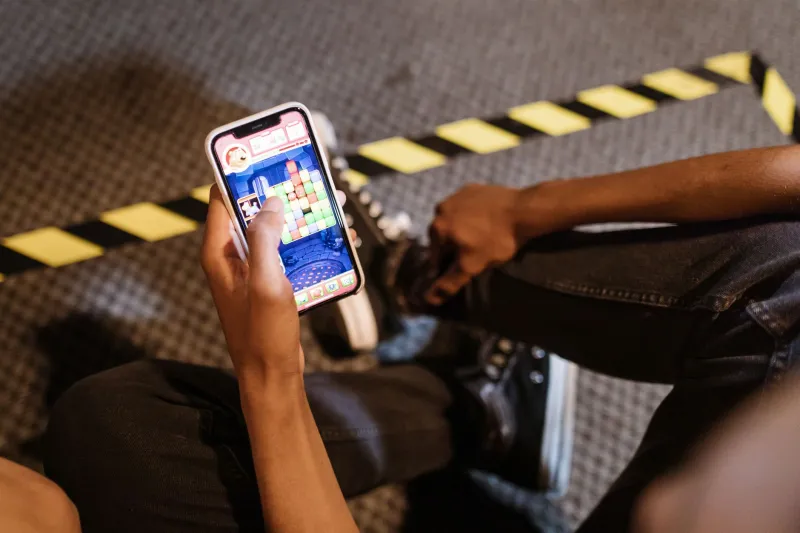
Imagine playing your favorite slot game in free mode. You spin, you win, you lose — and honestly, it's pretty fun. Now imagine that exact same game, same graphics, same sound effects, same spin button, but this time there's twenty bucks behind every click. Something shifts, right? The colors seem a little brighter. The near-misses sting just a little more. The wins feel genuinely exciting rather than mildly satisfying.
That shift isn't in your imagination. It's a real, measurable psychological transition — and most players walk right into it without realizing how much it changes the way they think, decide, and feel.
The "Play Money" Problem
Free-to-play gaming is genuinely great for learning the ropes. You get to understand how a game works, what the bonus features do, how often certain symbols appear. But here's the thing: your brain isn't fully engaged when nothing real is at stake. Behavioral economists call this the "house money effect" in reverse — when there's no actual cost to losing, your decision-making circuits kind of... clock out.
You'll take risks in free mode that you'd never take with real money. You'll spin faster, care less about your balance, and make choices based on vibes rather than anything resembling strategy. That's not a flaw — it's just how human psychology works. Our brains are wired to allocate attention proportionally to perceived consequences.
The moment real money enters the picture, a different part of your brain lights up. The prefrontal cortex — the area responsible for planning and risk assessment — suddenly wants a seat at the table. Your emotional brain, the limbic system, starts paying much closer attention too. The result? The same game genuinely feels different, even if not a single pixel has changed.
Why We Underestimate the Transition
Most players assume they'll handle the switch from free play to real-money gaming smoothly. "I know how this game works," the thinking goes. "I've been playing it for weeks." And technically, that's true. But familiarity with the mechanics doesn't prepare you for the emotional weight that real stakes introduce.
There's a cognitive bias at play here called the projection bias — our tendency to assume our future emotional state will mirror our current one. When you're sitting in free-play mode, calm and unbothered, it's genuinely hard to predict how differently you'll feel when there's actual money moving. You project your current chill onto a future scenario that's actually quite different.
This is why so many players report that their first real-money session felt "more intense" than expected. Not necessarily bad — intense can mean exciting, thrilling, fully alive. But intense does mean that the mental habits you built in free mode might not carry over cleanly.
The Value Perception Flip
Here's something interesting: real money doesn't just make games feel more stressful — it can also make wins feel more meaningful in ways that free play simply can't replicate. There's a psychological principle called loss aversion, famously documented by researchers Kahneman and Tversky, which holds that losses feel roughly twice as painful as equivalent gains feel good. When real money is involved, both sides of that equation get amplified.
A $5 win in real-money gaming carries a satisfaction that no free-mode equivalent can touch, because your brain knows that $5 represents something real — a coffee, a few minutes of work, a small but genuine exchange of value. The same goes for losses, which is why emotional management becomes so much more important once you've made the switch.
Understanding this flip — that real money makes both highs higher and lows lower — is genuinely useful information. It means you should approach your first real-money sessions with a slightly different mindset than your free-play sessions. Slower decisions. More intentional bankroll thinking. More awareness of how you're feeling in the moment.
Decision Confidence Takes a Hit (At First)
Another shift that catches players off guard: decision confidence. In free-play mode, most people make choices quickly and without much second-guessing. After all, what's there to lose? But introduce real money, and suddenly every spin comes with a little asterisk. Am I sure about this bet size? Should I have waited? Was that the right moment to use the bonus feature?
This hesitation isn't irrational — it's actually your brain doing its job, trying to protect real resources. But it can make the gaming experience feel clunkier and less fluid than you're used to. The good news is that this phase passes. As you build experience with real-money play, your confidence calibrates to the actual stakes, and decision-making starts to feel natural again.
The key is not to let that initial hesitation push you into overcompensating — either by making reckless decisions to "prove" you're not nervous, or by playing so cautiously that you're not really engaging with the game at all.
Making the Transition Work for You
So how do you cross the bridge from free play to real-money gaming without getting tripped up by your own psychology? A few things genuinely help:
Start with smaller stakes than you think you need. The goal of your first real-money sessions isn't to win big — it's to get familiar with how the emotional landscape feels. Low stakes let you experience the shift without the pressure of significant losses.
Notice your emotional state before you play. Real-money gaming interacts with your mood in ways that free play simply doesn't. If you're already stressed or chasing something, that's worth knowing before you deposit.
Give yourself permission to feel the difference. Some players try to convince themselves that real-money play is "just like" free play. It isn't, and pretending otherwise leaves you unprepared. Acknowledging the difference is actually a form of playing smart.
The transition from free gaming to real-money play is one of the most underappreciated moments in any player's journey. It's not just a financial change — it's a psychological one. The players who understand that tend to handle it a whole lot better than the ones who don't.