What's Actually Happening in Your Brain Every Time You Hit Spin
The Moment Before You Know
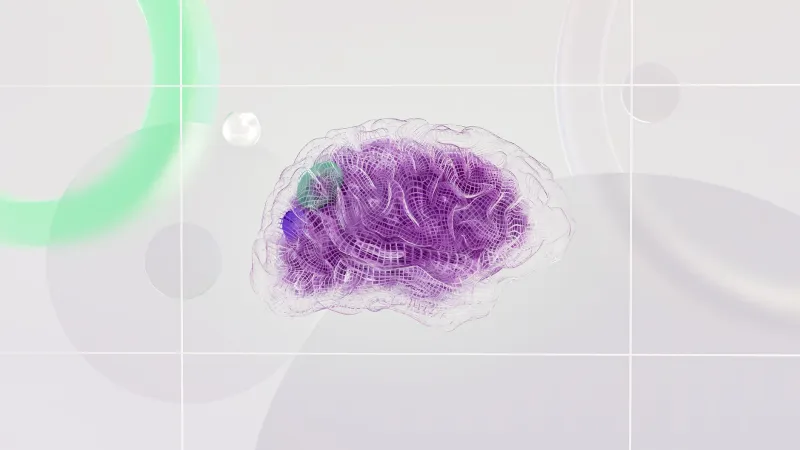
There's a split second — right after you hit spin and before anything lands — where something interesting happens in your brain. You're not winning yet. You might not win at all. But your brain doesn't really care about that distinction. It's already firing.
That anticipatory buzz isn't a personality quirk or a sign that you're "addicted to gambling" or whatever loaded phrase gets thrown around. It's just neuroscience doing what neuroscience does. And once you understand the machinery behind it, gaming starts to look a little different — not worse, not better, just clearer.
Dopamine's Actual Job (It's Not What You Think)
Most people assume dopamine is the "pleasure chemical" — the thing your brain releases when something good happens. That's a reasonable shorthand, but it misses the more interesting part.
Researchers have found that dopamine is less about pleasure and more about prediction and anticipation. Your brain releases dopamine not just when you win, but when it thinks you might win. The uncertainty itself is part of the trigger. In fact, unpredictable rewards — the kind where you genuinely don't know what's coming — tend to produce stronger dopamine responses than guaranteed ones.
This is sometimes called the "variable reward" effect, and it shows up everywhere from slot machines to social media notifications to scratch tickets at the gas station counter. The not-knowing is baked into the appeal.
For players on platforms like Loto188 Games, this plays out constantly. Each spin, each lottery draw, each number you pick carries that electric uncertainty. Your brain isn't just along for the ride — it's actively engaged in the suspense.
Why Losses Don't Always Feel Like Losses
Here's where things get really interesting. Most people assume that losing should feel bad, and winning should feel good, and over time those feelings should balance out your behavior. But the brain doesn't run on that clean a system.
Studies on near-misses — those moments where you land two out of three matching symbols, or your lottery numbers miss by one digit — show that these outcomes activate reward circuits in ways that are surprisingly similar to actual wins. Your brain processes "almost" very differently than it processes "not even close."
The near-miss doesn't register as a loss. It registers as almost winning, which your brain treats as evidence that winning is possible, maybe even likely, if you just keep going. It's a glitch in the system, in a sense — a feature that evolution built in to keep us motivated through setbacks, now running in a context our ancestors definitely never encountered.
Understanding this doesn't make near-misses less exciting. But it does help explain why a session that technically involved a lot of losing can still feel engaging in the moment.
The Anticipation Loop
So what does a typical gaming session actually look like, neurologically? It's less of a straight line and more of a loop.
You start a session with baseline dopamine levels. You place a bet or spin. Dopamine rises in anticipation. If you win, there's a reward signal. If you lose, the drop can feel sharper than you'd expect — a phenomenon sometimes called the "reward prediction error." Your brain expected something and didn't get it, and that mismatch registers.
But then you spin again, and the cycle restarts. The anticipation resets. Dopamine climbs back up. This loop is part of why gaming sessions can stretch longer than you planned — not because of any single outcome, but because each new spin kicks off a fresh round of anticipation.
Knowing this loop exists is genuinely useful. It helps explain why setting a time limit before you start a session tends to work better than trying to decide when to stop in the middle of one. When you're mid-loop, your brain is not in the best position to make that call.
The Role of Wins — Big and Small
Not all wins hit the same way. A small, frequent win produces a different neurological response than a large, rare one. Frequent small wins keep the dopamine system ticking along steadily, which feels good in a low-key, sustained way. Big wins produce a sharper spike — the kind of moment that can genuinely stick in your memory for years.
Both have their place in why gaming feels fun. The steady drip of smaller payouts keeps engagement alive during a session. The possibility of a larger score gives the whole thing a sense of stakes. Game designers — whether they're building lottery formats or digital slots — generally understand this balance pretty intuitively, even if they don't always explain it in neuroscience terms.
For players, it's worth noticing which type of win you're actually chasing. Some people genuinely enjoy the rhythm of frequent small outcomes. Others are there for the long shot. Neither is wrong, but knowing your own preference can help you pick games that actually match what you're looking for.
Playing With Awareness
None of this is meant to be a buzzkill. The dopamine system isn't some sinister trap — it's just how human brains are wired to engage with uncertainty and reward. The same basic circuitry that makes gaming fun also makes rooting for your favorite team fun, or trying a new restaurant, or watching a close game go into overtime.
But awareness has real value. Players who understand why their brain responds the way it does tend to make more intentional choices. They're less likely to chase losses under the assumption that the near-misses mean a win is "due." They're more likely to set limits that actually hold. And they often report enjoying gaming more — not less — because they're engaging with it on their own terms rather than just being swept along by the loop.
The spin is still fun. The anticipation is still real. You just know what's actually happening now.
The Takeaway
Your brain is genuinely remarkable at finding engagement in uncertainty. That's not a flaw — it's part of what makes games of chance feel alive in a way that purely skill-based activities sometimes don't. The house doesn't manufacture that feeling out of nowhere; it's meeting your brain where it already is.
The players who seem to enjoy gaming the most over the long run aren't the ones who ignore the psychology — they're the ones who get curious about it. They notice their own patterns. They play with intention. And they treat the experience as exactly what it is: entertainment with a neurological signature that's worth understanding.
So next time you hit spin and feel that little flicker before the reels stop — now you know what that is. Pretty cool, honestly.