Where Did the Night Go? The Science of Time Blindness in Online Gaming
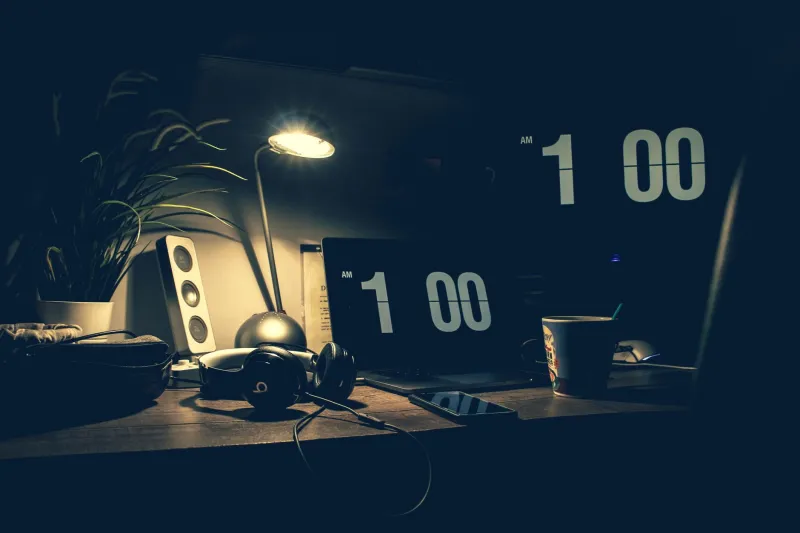
You told yourself thirty minutes, maybe forty-five tops. Then you blinked, and the clock on the microwave said 2:17 a.m. The coffee you made around 9 p.m. is sitting cold on the counter. Sound familiar? If you've ever lost track of time during an online gaming session, you're not alone — and you're definitely not weak-willed. What's happening to you has a name, a mechanism, and a surprisingly fascinating explanation.
Let's dig into why "just one more spin" is one of the most slippery phrases in casual gaming.
Your Brain Is a Terrible Clock (Especially When It's Having Fun)
Human beings are notoriously bad at estimating time during engaging activities. Psychologists call this temporal distortion, and it kicks in hard when your brain is flooded with anticipation and intermittent reward. Online gaming — particularly games of chance where outcomes are unpredictable — creates the perfect storm for this effect.
Here's the short version: when your brain is locked into a cycle of anticipation and resolution (will I win? did I win? okay, one more), it allocates almost zero cognitive resources to tracking time. The prefrontal cortex, which handles things like planning and self-monitoring, essentially gets sidelined while your limbic system — the emotional, reward-hungry part — runs the show.
The result? Thirty minutes feels like ten. An hour feels like twenty. And before you know it, you've blown past your bedtime by a factor of three.
Why Online Gaming Hits Different Than Traditional Play
If you've ever spent an afternoon at a physical casino, you probably noticed something: there are no clocks on the walls. No windows. The lighting stays consistent whether it's noon or midnight. That's completely intentional, and it's been standard practice in land-based gaming venues for decades.
Online platforms carry some of these same environmental cues — or rather, the absence of cues. Your screen glows at a steady brightness. There's no ambient noise from the outside world bleeding in. The interface looks exactly the same at 8 p.m. as it does at 1 a.m. Unlike a night out at a casino in Vegas or Atlantic City, there's no drive home to snap you back to reality, no parking garage to navigate, no friends tugging at your sleeve saying they're ready to leave.
Digital gaming removes almost every external anchor that would normally signal the passage of time. You're floating in a kind of temporal bubble, and the only thing keeping you company is the next spin.
There's also the frictionless nature of it. At a physical location, you have to physically exchange money for chips or tokens, walk between machines, wait for a machine to free up. Online? The next game loads in under a second. That frictionlessness isn't just convenient — it's a significant accelerant for extended sessions.
The 'Almost Done' Illusion
Here's where it gets really interesting. Many players report that they stay longer not because they're winning, but because they feel like they're about to turn a corner. Maybe they're down a little and expect things to even out. Maybe they just hit a near-miss that felt tantalizingly close. Either way, the brain interprets these moments as evidence that momentum is building — even when statistically, each spin is an independent event.
This creates a cognitive loop that researchers sometimes call the "completion compulsion." Your brain doesn't like leaving things unresolved. A session that ends on a loss or a near-miss feels incomplete, and there's a strong psychological pull to keep going until you get a satisfying conclusion. Problem is, "satisfying conclusion" keeps moving further down the road.
Combine that with the time distortion effect, and you've got a recipe for sessions that stretch well past what you planned.
Environmental Factors That Make It Worse
Your setup matters more than you think. Playing in a dark room with headphones on at night is essentially removing every remaining time cue from your environment. You've created a sensory environment that is almost perfectly optimized for losing track of time.
Contrast that with playing in a well-lit room with background noise — a TV on in the corner, natural light if it's daytime, maybe other people moving around the house. Those ambient cues constantly remind your brain that time is passing and the world outside your screen exists.
Other factors that extend sessions without players realizing it:
- Comfortable seating. If you're not physically uncomfortable, you have fewer reasons to get up.
- Easy access to snacks and drinks. No need to leave means no natural pause in play.
- Auto-play features. Some games allow you to set spins to run automatically, which can cause time to vanish at an alarming rate.
- Notifications turned off. Silencing your phone removes the interruptions that would otherwise pull you back to real-world time.
Practical Ways to Reclaim Your Clock
The good news is that once you understand what's happening, you can work with your brain's tendencies instead of against them. None of these strategies require willpower alone — they're about engineering your environment to support the kind of gaming experience you actually want.
Set a physical timer, not a phone alarm. A kitchen timer or a standalone alarm clock creates a more jarring, unavoidable interruption than a phone notification you can swipe away. When it goes off, the session ends — no negotiating.
Use session limits on the platform itself. Many reputable gaming platforms, including Loto188 Games, offer tools that let you set time or spending limits before you start. Use them. Setting the boundary before you're in the middle of a session is infinitely more effective than relying on in-the-moment judgment.
Play with the lights on. Seriously. Bright lighting helps your brain maintain awareness of your environment and, by extension, the passage of time.
Schedule gaming like an appointment. Instead of "I'll play for a bit tonight," try "I'll play from 8 to 9 p.m." Defined start and end times make the boundary concrete instead of fuzzy.
Take mandatory breaks. Standing up, stretching, and physically leaving the room — even for five minutes — resets your temporal awareness in a meaningful way. It's hard to feel like no time has passed when your legs remind you that you've been sitting for two hours.
Playing Smart Is Playing Long
Here's the real irony of time blindness in gaming: the sessions that go on the longest are rarely the most enjoyable in retrospect. Most players look back on marathon sessions with a mix of fatigue and mild regret, rather than the satisfaction of a well-spent evening.
The players who tend to enjoy gaming the most over time are the ones who treat it like the entertainment it is — something with a beginning, a middle, and a clear end. Like a movie, or a dinner out with friends. You wouldn't let a movie run indefinitely on a loop. You don't have to let your gaming sessions do that either.
At Loto188 Games, the goal is always for you to walk away from a session feeling like you had a good time — not like you lost track of half your night. Understanding the mechanics of time distortion isn't about making gaming less fun. It's about making it sustainably fun, session after session.