Why Winning Feels Completely Different When Someone's Watching
Picture this: you're playing your favorite game on Loto188 Games at 11 PM, alone in your apartment, headphones in. You hit a solid win — a genuinely good outcome. You feel good. Maybe you pump your fist a little. Then you move on.
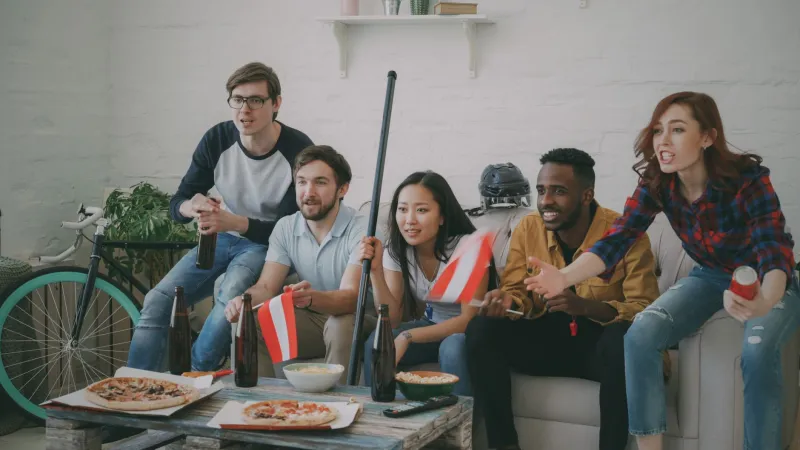
Now imagine the same exact win happening at a friend's place, four people crowded around a laptop, someone literally grabbing your arm when the reels line up. The room explodes. Someone's yelling. You're laughing. The win feels enormous.
Same game. Same win amount. Completely different experience. Why?
The answer lives in some genuinely fascinating neuroscience — and it has real implications for how you approach gaming, whether you're a solo player or a social one.
Your Brain on Shared Experience
Humans are wired for social reward. The brain's dopamine system — the network responsible for pleasure, motivation, and reinforcement — doesn't just respond to what happens to you. It responds to social context too.
Studies in social neuroscience have shown that positive outcomes experienced in the presence of others produce measurably stronger dopamine responses than the same outcomes experienced alone. The brain essentially "doubles down" on the reward when other people are involved, because social validation and shared excitement are themselves rewarding stimuli — layered on top of the original event.
This is why the same win hits differently depending on who's in the room. It's not sentimentality. It's biology.
The Audience Effect: How Being Watched Changes Your Play
Long before you win or lose anything, the presence of other people is already changing how you play. Psychologists call this "social facilitation" — the tendency for people to perform differently (sometimes better, sometimes worse) when others are watching.
For well-practiced, familiar tasks, an audience tends to boost performance. For complex, unfamiliar tasks, it can create pressure that leads to worse decisions. In gaming terms: if you know your game well and you're comfortable with it, having friends watch can actually put you in a sharper, more focused state. The slight elevation in arousal that comes from being observed can heighten attention and make the experience feel more charged.
But there's a flip side. Social pressure can also push players toward riskier choices — bigger bets, longer sessions, decisions driven by the desire to impress or the embarrassment of stopping while others are watching. That's worth being aware of, especially in group settings where the energy can escalate quickly.
Shared Losses Hit Differently Too
Here's the part that surprises people: the social amplification effect works on losses as well as wins — but in a more complicated way.
When you lose alone, the negative emotional response is processed privately. You might feel disappointed, but you move on. When you lose in front of others, the experience gets more complex. There's the loss itself, and then there's the social layer — did anyone notice? Do I look foolish? Should I try to recover?
Interestingly, research suggests that shared losses can sometimes feel less painful than solo losses, because the social support available in a group setting buffers the emotional impact. Friends who groan along with you, who laugh it off together, who immediately pivot to "okay, what's next" — they're providing real emotional regulation that changes how your brain processes the negative outcome.
This is one reason why gaming with trusted friends tends to create more resilient, more balanced players. The emotional highs are higher, but the lows are also softened by collective processing.
Mirror Neurons and the Vicarious Thrill
One of the most fascinating aspects of social gaming is what happens when you're watching someone else play rather than playing yourself. Your brain's mirror neuron system — which fires both when you perform an action and when you observe someone else performing it — means that watching a friend hit a big win activates many of the same reward pathways as if you'd won yourself.
This is why watching someone else play can be genuinely exciting. You're not just a passive observer. Your brain is running a kind of simulation, experiencing the emotional contours of the game through your friend's reactions. The suspense, the near-miss tension, the eruption of a win — you feel versions of all of it, even from the sideline.
For gaming platforms, this has interesting implications. The rise of streaming gaming content — watching others play on platforms like Twitch — is powered in large part by this neurological reality. People aren't just watching for information or entertainment in a detached sense. They're experiencing vicarious reward.
Group Dynamics and Risk Perception
One more layer worth unpacking: groups change how we perceive risk. Research on "risky shift" — a phenomenon documented since the 1960s — shows that people in groups often make riskier decisions than they would alone. The shared responsibility diffuses individual accountability, and the social energy of a group can make bold choices feel more exciting and less dangerous.
In a gaming context, this can manifest as betting more than you'd planned, staying in a session longer than your solo self would, or trying games you'd normally avoid because the group energy made it feel fun and low-stakes. None of these things are inherently bad — but they're worth knowing about so you can make conscious choices rather than just getting swept up.
Making the Most of Social Gaming
So what do you do with all of this? A few thoughts:
Lean into the shared win. If you're gaming with friends, let yourself enjoy the collective celebration. The amplified dopamine hit is real, and there's nothing wrong with savoring it. Those are the moments that become stories.
Set individual budgets, even in groups. The risky shift is real. Agreeing on personal limits before a group session starts keeps the social energy from overriding smart financial decisions.
Use shared losses as bonding moments, not shame spirals. A group that laughs off a bad run together and moves on is a group that'll have a better time overall — and that's the whole point.
Solo gaming has its own value. The quieter, more reflective experience of playing alone isn't inferior — it's just different. Solo sessions are where a lot of players develop their actual preferences and strategies, free from the influence of the crowd.
At Loto188 Games, whether you're spinning solo or sharing the screen with friends, the experience is designed to be genuinely fun. Knowing a little about the neuroscience behind it just makes you a more intentional — and probably happier — player.